Cart
0
Back to Journal
Polki vs Kundan Jewellery: What Is the Difference?

If you have ever shopped for Indian bridal jewellery or festive jewellery online, you have likely come across the words polki and kundan. Both styles look rich, traditional and grand — but they are made using very different techniques. Understanding the difference helps you choose the right piece for your wedding, sangeet or Diwali look.
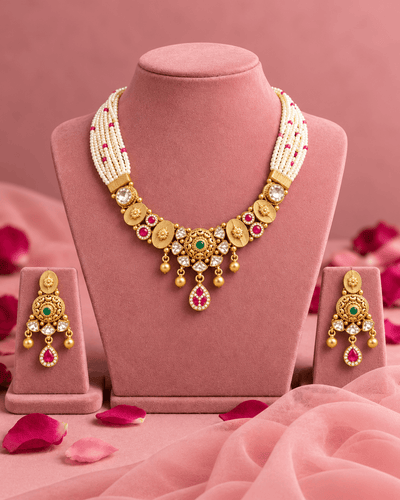
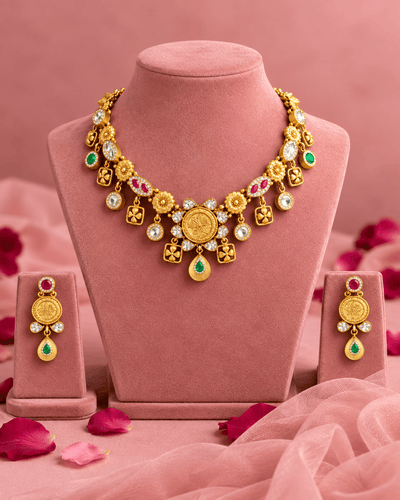
At Silver By Rakam Gold, we make both polki-style and kundan-style jewellery in handcrafted 925 sterling silver with gold plating — so you get the traditional look of fine Indian jewellery at an accessible price, with the lasting value of real silver.
What is Kundan jewellery?
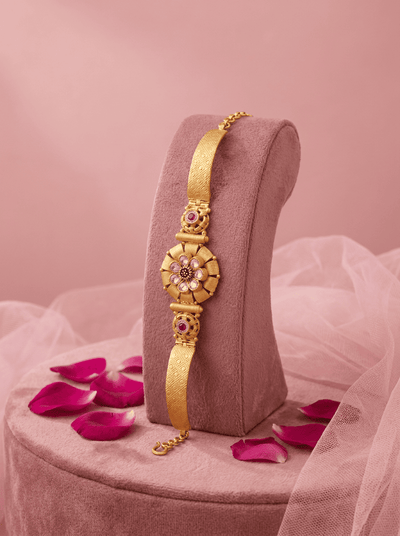
Kundan is one of the oldest forms of Indian jewellery, originating in the royal courts of Rajasthan and Mughal India. In kundan jewellery, stones — typically glass, crystal or semi-precious stones — are set into a gold or gold-plated base using a technique where the metal is pressed and shaped around the stone. The result is a smooth, continuous surface of stones with almost no visible metal between them.
- Rich, flat appearance with stones covering most of the surface
- Often reversible — the back is finished with meenakari enamel work
- Traditional Rajasthani and Mughal look
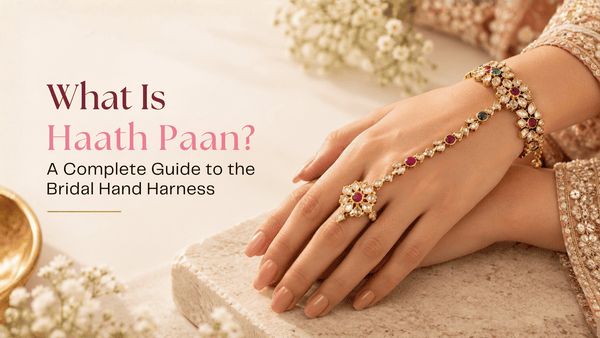
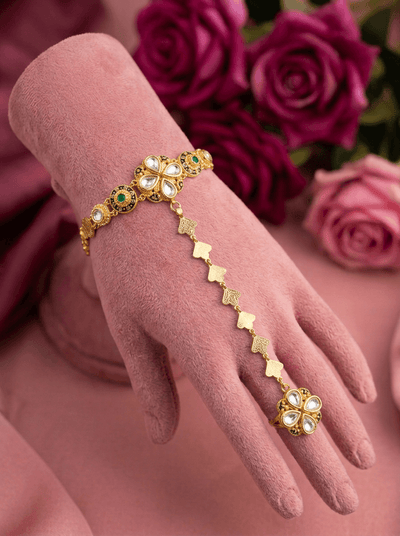
- Used in bridal sets, chokers, haath paan and long necklace sets
What is Polki jewellery?
Polki refers to uncut, raw diamond-look stones set in gold. Polki jewellery has a softer, more organic sparkle than faceted jewellery. Today, polki-style jewellery uses uncut stone-look glass or crystal set in gold-plated silver — making the traditional polki look accessible without the cost of real uncut diamonds.
- Organic, soft sparkle from uncut stone surfaces
- More textured and layered appearance than kundan
- Heritage, regal aesthetic popular in North India
- Popular for North Indian weddings and high-end festive looks
Polki vs Kundan — key differences
| Feature | Kundan | Polki |
|---|---|---|
| Stone type | Glass, crystal, semi-precious | Uncut stone-look glass or crystal |
| Setting style | Stones pressed into metal, flush finish | Uncut stones set in layered gold |
| Sparkle | Smooth, colourful | Soft, organic |
| Look | Flat, continuous stone surface | Textured, dimensional |
| Origin | Rajasthan, Mughal era | North Indian bridal tradition |
| Best for | Weddings, festivals, bridal sets | Bridal jewellery, grand occasions |
Which should you choose?
- Choose kundan if you love rich colour, want stones that pop, and are pairing with a heavily embroidered lehenga or saree.
- Choose polki if you prefer a heritage, heirloom-style look with a softer sparkle.
- Both styles work beautifully as wedding gifts for brides, family members and bridesmaids.
Shop polki and kundan jewellery — Silver By Rakam Gold
Browse our polki jewellery collection and our full range of bridal jewellery, all handcrafted in Mumbai in 925 sterling silver with gold plating. Free shipping on orders above ₹1,999.
Need help choosing between polki and kundan for your wedding look? Chat with us on WhatsApp — we help brides across India every day.